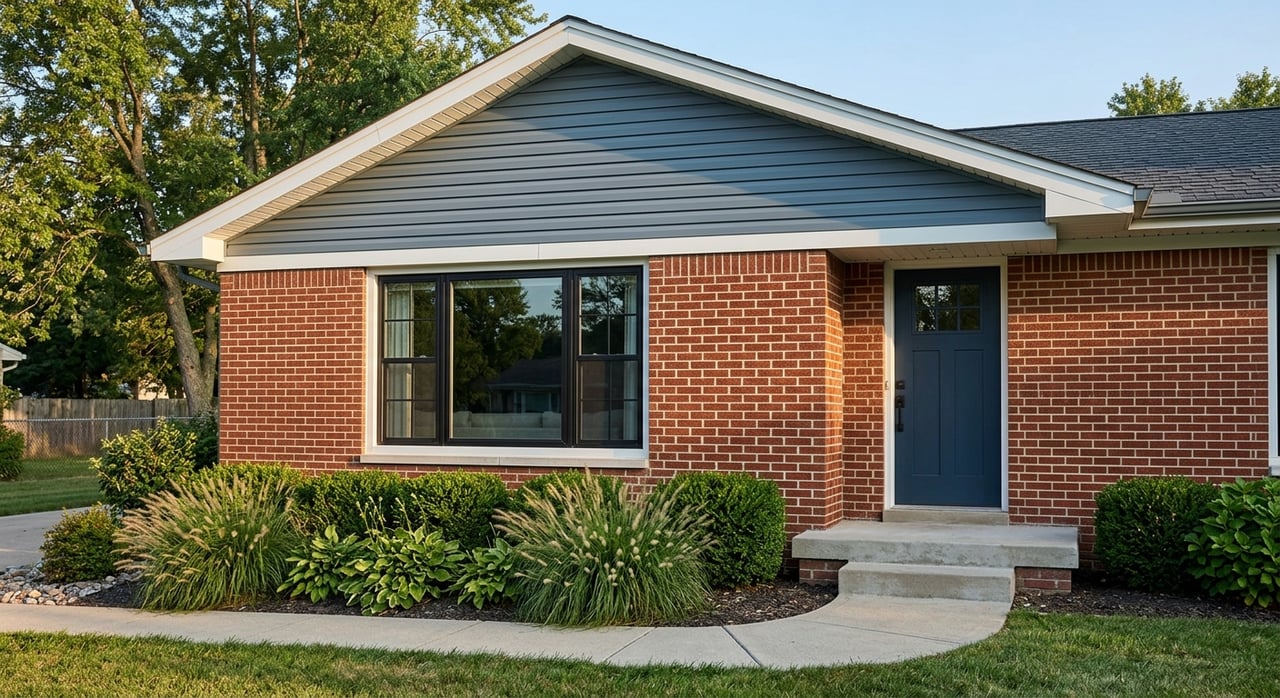
Trying to choose between a brand-new home and an existing one in Chesterton? You are not alone. In a market where new-home starts are active and existing homes are seeing plenty of repairs and remodels, the right choice often comes down to your timeline, budget, and comfort with future projects. This guide will help you compare both paths in practical terms so you can move forward with more confidence. Let’s dive in.
Chesterton Gives You Two Real Options
Chesterton is not a market where only one path makes sense. Town data shows active new construction and steady existing-home improvement activity at the same time, which means buyers in 46304 often have a real choice between building new and buying resale.
That matters because Chesterton sits above the Indiana median for owner-occupied home value. The 2024 median owner-occupied housing value in Chesterton was $300,900, compared with $218,200 statewide. With that kind of pricing context, it is worth looking closely at what you get for your money in each category.
Why Some Buyers Prefer New Construction
New construction usually appeals to buyers who want a simpler maintenance outlook in the early years. If you like the idea of moving into a home where major systems and materials are brand new, this option can feel more predictable.
It can also be a strong fit if customization matters to you. In many new-build situations, you may have opportunities to choose finishes, colors, or certain design features before the home is complete.
Active Build Areas in Chesterton
In 2025, Chesterton’s new-home starts were concentrated in a few key developments. Town reporting identified Springdale, Easton Park, 1100 Woods, and the Estates of Sand Creek as active build areas.
Pricing in the town’s examples ranged from about $250,000 to $550,000, with some higher-value starts reaching $633,000. Through the first eight months of 2025, the town had already issued 48 new-home permits, exceeding the 42 permits issued in all of 2024.
The Appeal of a Fresh Start
A new home often gives you a cleaner maintenance slate. Instead of immediately budgeting for older roofs, windows, siding, or dated interiors, you are starting from day one with new materials and systems.
Builder warranty coverage is another advantage many buyers like. New-home warranties often include one year of workmanship and materials coverage on many components, two years on HVAC, plumbing, and electrical systems, and in some cases up to 10 years for major structural defects.
What to Expect From the Process
Buying new construction is usually more involved than buying a resale home. Chesterton’s permit process for new one- and two-family homes requires fees at submission, licensed and insured contractors, and inspections with at least 24-hour notice.
Permits for new dwellings are valid for 18 months, which gives you a sense of the longer timeline involved. If you need to move quickly, that timeline can be a major factor.
Why Some Buyers Prefer Existing Homes
Existing homes are often the better fit if speed and neighborhood variety matter most to you. A resale purchase usually offers a faster path to closing and occupancy than a home that is still being built.
You may also find more choices across different parts of Chesterton instead of focusing mostly on a few active developments. For buyers who want a specific street feel, lot type, or established setting, resale homes can open up more options.
Existing Homes Can Offer Flexibility
A resale home can give you the chance to trade sweat equity for value. If you are comfortable making updates over time, an older home may let you get into the market and improve the property in phases.
That tradeoff is very real in Chesterton. In 2025, the town recorded 402 single-family repairs and 57 residential remodels, which shows how common replacement and improvement work is in the local market.
Maintenance Is a Bigger Part of the Equation
When you buy an existing home, you should expect to look closely at condition. Roofs, windows, siding, kitchens, baths, decks, and fences are all items that may need attention depending on the home’s age and upkeep.
This is where a practical, renovation-aware approach can help. Hidden work is not just a theoretical concern in Chesterton. The town’s permit activity shows that repair and upgrade work happens regularly, so it makes sense to evaluate deferred maintenance before you commit.
Timeline May Be the Deciding Factor
If you need to move on a predictable schedule, existing homes usually have the edge. A standard resale transaction is often more straightforward because the home is already built, available for inspection, and moving toward a defined closing date.
New construction can be worth the wait, but it requires more patience. Between permitting, inspections, build schedules, and final completion, the path is often longer and less simple.
Ask Yourself These Timeline Questions
- Do you need to move within the next few months?
- Are you flexible if construction takes longer than expected?
- Do you need a firm closing window for a job change or sale of another home?
- Would you rather finish projects later or wait for a finished new home now?
If your move date is firm, resale may be easier to manage. If flexibility is on your side, new construction may stay in play.
Financing and Appraisal Differences Matter Too
The money side of the decision can look different depending on the property type. New construction may involve a more specialized financing path than a typical resale purchase.
The Consumer Financial Protection Bureau describes a construction-to-permanent loan as a loan that can finance construction, rehabilitation, or improvement of a dwelling and later convert to permanent financing with the same lender. That means some buyers may face a loan structure that is less familiar than a standard purchase mortgage.
New Builds Can Be More Document Heavy
Appraisals can also differ. For new construction, HUD guidance says the appraiser needs a complete set of plans and specifications plus builder certification, and the appraisal can serve as the final inspection only when the property is 100% complete.
That is a more document-heavy path than many resale purchases. In Chesterton, where many new-home starts are clustered in a few subdivisions, a highly customized or early-phase build may also have a narrower set of comparable sales for the appraisal.
Resale Appraisals Use Comparable Sales Too
For existing homes, appraisals still matter, but the process is often more familiar. Valuations commonly compare the home to similar nearby sales and adjust for differences such as square footage, bedrooms, bathrooms, and year built.
In many resale situations, there may be a broader pool of similar homes to compare, especially in more established sections of town. That can make pricing and valuation feel a bit more straightforward.
Budgeting Beyond the Purchase Price
The list price is only part of the story. What matters most is how the home fits your full budget over the first year and beyond.
With new construction, you may pay more upfront for the benefit of newer systems, builder warranty coverage, and customization. With an existing home, the purchase price may be more flexible, but your post-closing budget may need to include repairs, updates, or staged improvements.
A Simple Way to Compare Costs
When you compare options, look at:
- Purchase price
- Expected repair or renovation costs
- Warranty coverage
- Time to move in
- Financing complexity
- Your comfort with future maintenance
This kind of side-by-side review often makes the answer clearer. The “better” option is the one that works for your goals, not the one that sounds newer or cheaper on paper.
How to Decide in Chesterton
In Chesterton, the choice between new construction and an existing home is especially practical because both parts of the market are active. The town reported 58 new-home starts, 57 residential remodels, and 1,609 inspections in 2025, so buyers are clearly pursuing both paths.
A good decision usually starts with four questions: how soon you need to move, how much customization matters, how comfortable you are with maintenance risk, and whether you want to handle improvement costs upfront or over time. Those answers tend to point you in the right direction quickly.
If you want a move-in-ready feel and a cleaner maintenance baseline, new construction may be the better fit. If you want faster occupancy, more location variety, or a value-add opportunity, an existing home may make more sense.
Jason Lynn’s background in mortgage, title, and renovation gives you an advantage when comparing these choices. If you want help weighing timelines, renovation feasibility, financing questions, or neighborhood fit in Chesterton and nearby Northwest Indiana markets, reach out to Jason Lynn for practical guidance.
FAQs
Should I buy new construction or an existing home in Chesterton?
- The better choice depends on your timeline, budget, maintenance comfort, and how much customization you want. New construction often offers a newer-condition starting point and warranty coverage, while existing homes often offer faster occupancy and more location options.
Are there active new construction neighborhoods in Chesterton?
- Yes. Town reporting identified Springdale, Easton Park, 1100 Woods, and the Estates of Sand Creek as active build areas in 2025.
What price range do new homes in Chesterton fall into?
- In the town’s 2025 examples, new-home starts ranged from about $250,000 to $550,000, with some higher-value starts reaching $633,000.
Do existing homes in Chesterton often need updates?
- Many can. Chesterton’s 2025 permit activity included 402 single-family repairs and 57 residential remodels, which suggests buyers should pay close attention to condition and possible deferred maintenance.
Is new construction in Chesterton a longer process than buying resale?
- Yes, it usually is. New construction involves permitting, inspections, contractor requirements, and build timelines that are generally more involved than a standard resale closing.
Can Indiana buyers get down payment help for a home purchase?
- Some qualifying buyers may be eligible for IHCDA homeownership programs. First Step offers qualifying first-time buyers 5% of the home price, and Next Home offers qualifying buyers up to 3.5%.